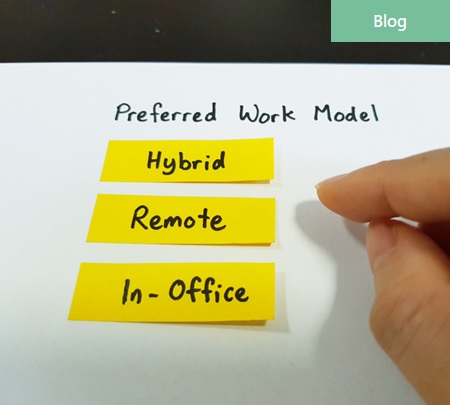
Long hours and a heavy workload seem to be the norm in professional service firms, that may not change anytime soon, but what does appear to be changing is that increased flexibility toward staff is now becoming the norm.
The terms “Exit Ready” and “Investor Ready” have become very popular when discussing what might need to happen in the period running up to when an owner might wish to merge or exit their business.
Selling your business is an important and significant life event. Few people get to build an enterprise that somebody else wishes to own and will pay a significant sum for.. Often, it’s the most valuable material asset you own and is the result of a lifetime’s work. When it comes time to sell or merge, it makes sense to do it right.
An exclusivity period is normally agreed upon between the vendor and the buyer once the headline indicative terms are agreed. These terms are typically set subject to due diligence and contract. Whilst these terms are rarely binding (although there are exceptions), they do set a detailed framework for what is going to happen as parties move toward a completed deal.
I was struck by the recent article in the Australian Financial Review by Yolanda Redrup, who quoted a frustrated CEO of Infomedia saying he had “closed the door on tyre kickers”.
I have witnessed this frustration many times, where vendors become sick of so-called buyers who turn out to be not serious acquirers.
Lesson #7 in our series, How to Sell a Business, covers the critical matter of deal structure. Once a willing buyer and a winning seller agree that they wish to transact, how should the transaction be constructed?
In just a couple of years, Generation Z will make up around a quarter of the workforce. This will have a significant impact on our working lives, and business owners will need to enter their world to understand what they want and how they communicate.
New AI phenomenon ChatGPT has the potential to be a big disruptor. For business owners, it highlights just how the best laid plans can come undone, and there is no perfect time to sell.
Businesses in Australia make an average profit of just under 10% of turnover. However, 20% of businesses in Australia don’t make any profit, that’s about 200,000 companies! In Lesson #6 we address the very real question facing those owners who are not making any profit, is my business worth anything?
As we contemplate a new year, we wanted to share with you some of the more practical reoccurring themes that Oasis has encountered while completing over 500 business sales. While I would hope that most of these you have already heard about in one form or another, I am reminded that repetition is the mother of skill.
Valuations for tech start-ups have fallen. Why? What does it mean?
Five months ago, the market sell-off smashed valuations in the tech. sector. Angel funds felt the brunt of the lower valuations and lower multiples. Many start-ups have lost out.
There's a “burgeoning body of evidence” that social media harms young people’s mental health and continuing to use it unjustifiable.
This issue affects us all – what is reasonable usage and how much is too much?
In speaking with a lot of owners of private businesses, I often hear stories of them being approached - seemingly out of the blue - by someone knocking on the door and looking to buy their business.
As one of the last of the baby boomers, born in 1964, and now having been in business for 38 years (anniversary was 21st September), I was reflecting - an activity that seems to be increasing with age! My life expectancy in 1964 was 67.6. To prove the point when I was just 6 my grandfather on my Dad’s side, John McGrath, tragically died suddenly from a heart attack age 66, a few months after retiring!
Richer, Older and Lonelier: How we have changed – an article from the AFR shines a light on the changing attitudes and behaviours of many Australians.
A report out of Melbourne indicates that Australians are working well into their 60’s and delaying retirement. Michael Read in the AFR reported that “in 2003, almost 70 percent of men and close to half of all women aged 60-64 were retired. In 2023 these figures had fallen to 41 percent and 27 percent respectively.”
Sometimes the best business stories start with a simple "why not?"
That's exactly what happened when Luke Petherbridge, a Sydney-raised finance guy, got asked if he'd consider moving to Cleveland, Ohio. Fast-forward a few years, and he's now running Link Logistics - one of America's largest logistics operations with 1,100 staff, 3,500 buildings, and a staggering statistic: roughly 5% of US GDP flows through their facilities.
Australia is getting older! Next year 22% of Australians will be aged 65 or older. This is up from 16% in 2020, this was double the 8% in 1970s. The reasons for the spike are the spike in the birth rate after the war (the baby boomers), as well as falling birth rates, however, on a positive note Australians are living 30 years longer than they were a century ago!
Businesses in the Australian mid-market, of which there are 300,000 have a combined annual revenue of 41.trillion dollars making average of 10.4% net profit before tax. However, 20% of all operating businesses in Australia don’t make any profit! In this blog we address the very real question facing those owners who are not making any profit, is my business worth anything?