
- 7 April 2026
- Michael McGrath
We recently facilitated the acquisition of IUP by Ambor Structures — and we think this deal says something important, not just about two companies finding a good fit, but about the broader conditions shaping mid-market M&A activity right now.
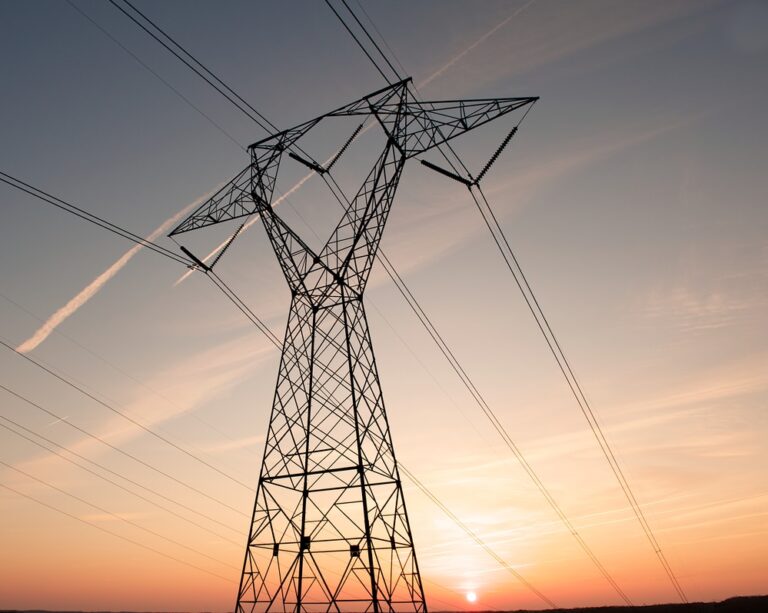
IUP designs and supplies steel utility poles and substation structures that connect renewable energy customers to the grid. Ambor Structures is a global provider of custom steel poles across telecom, lighting, wind, and utility sectors. On paper, it’s a clean strategic fit. In practice, it’s a transaction that took patience, careful positioning, and a disciplined process to execute well.
Here’s what this deal tells us about where we are — and where things are heading.
The Energy Transition Is Not a Theme. It’s a Transaction Driver.
By the end of 2024, renewables accounted for 46% of global installed power capacity, with a record 585 gigawatts added in the year alone — the largest single-year increase ever recorded. Solar and wind led the charge, and the demand for physical infrastructure connecting that energy to the grid has never been stronger.
That’s the environment IUP operates in. And it’s the environment that made IUP attractive to Ambor.
We have been writing about ESG and the energy transition as an M&A driver for some time. What’s changed is that it’s no longer speculative. Acquirers aren’t buying into a future thesis — they’re buying proven capability that already has a place in a supply chain they know is growing. The IUP transaction is a clear example of this. Steel utility poles and substation structures are unglamorous infrastructure. But they’re essential infrastructure, and essential infrastructure in a growing market commands a premium.
For business owners in adjacent spaces — electrical contracting, civil construction, specialised manufacturing, grid-connected services — this dynamic is worth understanding. Larger players are actively looking for companies with technical depth and established customer relationships in the energy transition supply chain. You may be more sought-after than you think.
Strategic Buyers Don’t Wait for Interest Rates.
One of the themes we identified in our 2024 M&A outlook was that the SME mid-market operates on different logic to large-cap deal activity. When commentators talk about deal markets being suppressed by rising interest rates or economic uncertainty, they’re largely describing a world of leveraged buyouts and private equity-led transactions.
Trade buyers — strategic acquirers acquiring businesses adjacent to their own — often operate differently. They typically have stronger balance sheets, lower cost of capital, and a fundamentally different calculus: time versus money.
A business that has taken 25 years or more to develop can save even a large conglomerate a decade or more — and that logic doesn’t change with the interest rate cycle.
In the IUP transaction, Ambor was not buying a financial return. They were buying capability, market position, and a team with deep technical expertise in a specialised field. That’s a strategic rationale that persists through cycles.
For owners of established private businesses, this matters. If your business has genuine intellectual property, specialised capability, or a strong market position — even in a niche — the pool of potential strategic acquirers is broader than most owners assume.
The Industrial Sector: Still the Engine Room of Australian Deal Flow.
According to the Grant Thornton Dealtracker, 31% of total deal flow in Australia in 2023 came from Industrials — 523 transactions. That makes it the most active sector by volume, and it’s a pattern we continue to see.
The IUP business sits squarely in this category. Steel fabrication, structural supply, utility infrastructure — these aren’t digital businesses or platform plays. They’re businesses built on engineering knowledge, customer relationships, and operational execution. And they transact regularly, because larger players in the industrial space are consistently looking to bolt on capability.
The sub-sectors that show particular activity include:
- Electrical equipment and infrastructure (directly relevant to the energy transition)
- Specialised manufacturing and fabrication with defensible niche positioning
- Engineering services supporting construction and infrastructure rollout
- Businesses with government-adjacent or regulated customer bases that provide revenue visibility
If your business operates in any of these spaces, deal appetite from strategic acquirers remains strong. The question is whether your business is positioned to take advantage of it.
Getting the Process Right: What the IUP Outcome Reflects.
Scott Coles, CEO of IUP, reflected after the transaction: “Simon worked very hard in sourcing strategic acquirers and found a buyer that would continue growing the brand we worked so hard to build. We were very pleased with the final outcome.”
That outcome — a buyer committed to growing the brand, a vendor satisfied with the result — doesn’t happen by accident. It reflects a few things that are easy to underestimate when owners first start thinking about a sale process.
Buyer sourcing is both a creative and thorough list build, and then a disciplined process of qualification.
Finding the right strategic acquirer requires understanding the acquirer’s logic — what they’re trying to build, what gaps they’re trying to fill, and why your business is the answer to their specific question. For IUP, that meant identifying a global operator in the steel pole sector with both the appetite and the capacity to absorb a complementary business. Generic outreach to a broad field produces generic outcomes. Targeted sourcing, built on genuine sector knowledge, produces the result Scott described.
Brand and culture matter to trade buyers.
One of the most consistent things we hear from vendors is that they want their business — and their team — to land well. They’ve spent decades building something and they don’t want to watch it disappear into a larger entity. The fact that Scott specifically called out Ambor’s commitment to continuing to grow the IUP brand is not a footnote. For many owners, it’s the most important thing. A good advisory process surfaces acquirers for whom this is a genuine commitment, not just a negotiating position.
Timing and positioning are within your control.
The businesses that achieve the best outcomes in a sale process are typically those that have built an asset that will endure — not in a cosmetic sense, but in terms of having clean financial information, clear articulation of their value proposition, and a realistic understanding of how and where they create value for their customers. Owners who begin thinking about exit two years before they want to transact are almost always better positioned than those who decide to sell and want to move quickly.
What This Means for Established Private Business Owners.
The broader M&A environment in Australia remains constructive for well-positioned businesses in the mid-market. Interest rates, while elevated compared to the zero-rate era, have less bearing on trade buyer activity than on leveraged transactions. Strategic acquirers with strong balance sheets — including the many corporates sitting on record cash levels — are actively looking for acquisitions that offer genuine capability they can’t easily build themselves.
The IUP–Ambor transaction is a useful illustration of a few principles that hold regardless of where the headline deal indices are pointing:
- Niche technical capability in a growing sector is highly attractive to larger players.
- Strategic rationale — the one-plus-one-equals-more-than-two logic — drives trade buyer appetite independent of the macro cycle.
- Matching the right buyer to the right vendor is a function of process and qualification, not luck.
- Owners who are represented by the right advisor achieve better outcomes — financially and in terms of deal features and transition.
If you are an owner of an established private business and the question of exit — whether now or in the next few years — is something you are starting to think about, the best time to have that conversation is before you need to have it.
We have been working with business owners on exit strategy since 1995. If you’d like to understand what your business might be worth, who the likely acquirers are, and what you should be doing now to be ready, we are happy to have that conversation.
Oasis Partners is an Australian mid-market M&A advisory firm acting exclusively for the shareholders of private companies. We work on behalf for sellers — not buyers — our sole focus is achieving the best possible outcome for the owners we work with.
#oasispartners #manda #sme #renewableenergy #industrials #exitstrategy #leveltheplayingfield